Your brick walls might look tough, but they need care to stay strong. Water, weather, and time will damage even the strongest masonry. But you can protect your investment with a few simple steps and prevent costly brick repairs down the road.
Most homeowners don’t realize their brick is vulnerable until after problems show up. By then, you’re looking at expensive fixes instead of easy prevention.
Let’s walk through proven ways to keep your masonry in top working condition.
What Causes Brick Damage?
Brick seems solid, but it’s actually full of tiny holes that soak up water like a sponge. When that water freezes, it expands and cracks your masonry from the inside out. Add in plant roots, pollution, and salt deposits, and you’ve got a recipe for serious damage.
The key is knowing what threatens your brick before problems start. Weather changes, poor drainage, and even climbing vines can turn small issues into major headaches. Once you understand these threats, protecting your masonry becomes much easier.
Why Brick Needs Protection
Brick is porous, which means it absorbs water naturally. This isn’t always bad, but when water gets trapped inside and freezes, it creates cracks and chips called spalling.
Plants and pollution also attack your masonry. Ivy roots work into mortar joints, while acid rain and car exhaust eat away at the surface. And ugly white stains (called efflorescence) show up when salts move through wet brick.
These are your primary signs of damage and should be addressed as quickly as possible.
Common Signs of Deterioration
Look for cracks running through bricks or along mortar lines. These let water in and get worse over time. Flaking and chipping (called spalling) shows up as water builds within the inner layers of the brick.
Check your mortar joints regularly. Crumbling or missing mortar leaves bricks loose and unstable. You might notice bricks shifting or bulging outward from the wall as the problem worsens.

Moisture Is Kryptonite To Masonry
Water is brick’s biggest enemy. Most masonry problems start with moisture getting where it shouldn’t be. Good drainage keeps water away from your walls, and proper flashing directs it safely around windows and doors.
Your gutters, downspouts, and yard grading all play important roles in protecting your masonry. When these systems fail, water pools against your foundation and soaks into brick walls.
Keeping Water Out
The key to preventing water infiltration in your masonry is to clean your gutters twice a year and fix any leaks right away. Clogged gutters overflow and dump water directly onto your brick walls, increasing their exposure to moisture dramatically.
Install proper flashing around windows, doors, and chimneys (and inspect your flashing annually). Flashing is a metal barrier that directs water away from vulnerable joints (where different materials meet).
Sealing vs. Waterproofing
It’s strongly advised to treat your bricks with breathable masonry sealers which let trapped moisture escape while keeping new water out. Siloxane-based products are your best bet for most masonry installations.
You don’t ever want to use waterproof coatings that trap moisture inside your walls. This creates bigger problems than it solves because the trapped water has nowhere to go and will find weak spots to cause damage.
Good Maintenance Extends The Life Of Your Brick
The thing to keep in mind is that regular maintenance, while it might seems like an expensive hassle, costs far less than masonry repairs. Simple inspections and gentle cleaning prevent basic problems when addressed early. In many cases homeowners can even handle this kind of basic maintenance themselves.
Check your masonry every season and address small issues before they grow. A little attention now saves thousands later because when you have to call the experts, there are already serious problems and they’re worsening gradually over time.
Regular Inspection and Cleaning
To perform a basic visual inspection, walk around your house every few months looking for new cracks, stains, or loose mortar. Take photos so you can track changes over time.
Clean your brick gently with low-pressure water and mild detergent. Never use a pressure washer on masonry; it damages mortar joints and brick surfaces. This cleaning helps to prevent mold, algae, and other minor damage easily.

Tuckpointing and Mortar Repair
Mortar holds your bricks together and keeps water out. When it crumbles or cracks, your entire wall becomes vulnerable.
When this starts to happen, you need to call professional masons to remove and replace your old mortar with fresh material that’s matched to your exterior’s existing brick. This process is called “tuckpointing” and it restores your wall’s strength and weather resistance.
Landscaping and Sprinkler Systems
Your landscaping affects your masonry more than you might think. Sprinklers, climbing plants, and poor drainage create moisture problems that damage brick over time. Setting up your landscaping, and especially sprinkler system correctly, is an important part of protecting your investment.
Design your outdoor spaces to work with your masonry, not against it. Simple changes in plant placement and irrigation can prevent thousands in repair costs.
Just remember that you never want pools of water collecting at the base of your foundation and grade your landscaping (and potentially install drainage systems) to make sure all moisture is flowing away from your house.
Vegetation and Irrigation Risks
Keep climbing vines off your brick walls. Ivy and other climbers send roots into mortar joints, causing cracks and water infiltration.
Adjust sprinkler systems so they don’t spray directly on brick surfaces. Constant moisture from irrigation accelerates deterioration and promotes mold growth.
Design Considerations
Add overhangs, awnings, or covered patios to shield brick from direct weather exposure. A cover reduces the water contact and UV damage that directly impacts your masonry.
Thinking about drainage is so important when planning your hardscaping. Patios and walkways should slope away from brick walls to direct water safely away. If not, you’re just asking for foundation problems in a few years.
Preparing For Winter
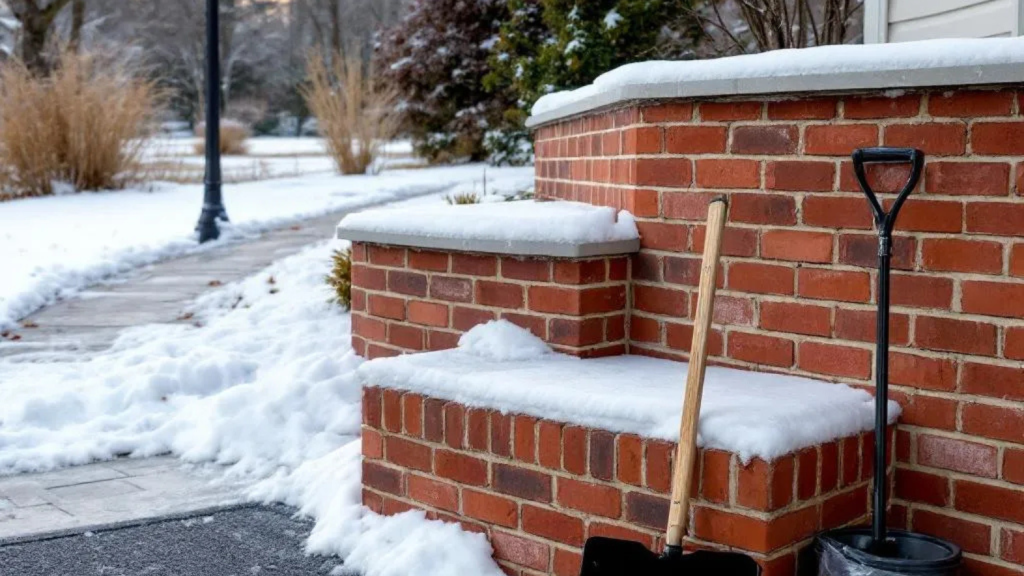
Winter brings special challenges for brick masonry. Freezing temperatures, ice formation, and deicing salts all threaten your walls. Proper preparation protects your masonry through the coldest months.
Start your winter masonry preparations in fall when temperatures are still mild. Once freezing weather arrives, some protective measures become impossible to apply effectively.
Cold Weather Threats
Ice formation inside brick pores creates tremendous pressure that cracks and chips the surface. This freeze-thaw damage happens repeatedly throughout winter.
Deicing salts from sidewalks and driveways splash onto brick walls and accelerate deterioration. These chemicals eat away at both brick and mortar.
Timing Is Important
Apply sealer in fall before freezing weather begins. Most sealers need temperatures above 50°F to cure properly. Protect vulnerable areas like steps, retaining walls, and foundation walls with extra attention. These surfaces face the most exposure to ice and salt.
Long Term Considerations
Some masonry problems require professional expertise to diagnose and fix properly. Structural issues, major cracks, and failing support systems need experienced hands to prevent dangerous collapses.
Modern techniques can strengthen old brickwork and extend its life significantly. Professional assessment helps you understand when repairs are needed and what options work best for your situation.
Calling The Pros
Call us if you notice bulging walls, large cracks, or bricks pulling away from the structure. These signs indicate serious problems that need immediate attention.
Steel ties, lintels, and reinforcement systems can strengthen failing masonry. These repairs require specialized knowledge and equipment to install correctly. Annual professional inspections catch problems early when repairs cost less and work better.
Extending Your Masonry’s Lifespan With Good Habits
Protecting your brick masonry isn’t complicated, but it does require attention and consistency. Regular maintenance prevents most problems, and prompt repairs stop small issues from becoming sprawling into emergencies.
The investment in proper protection pays dividends for decades. Well-maintained masonry adds value to your home while avoiding the hassle and cost of major repairs.
Quality masonry protection preserves your home’s value and appearance for generations. The cost of prevention is always less than the price of replacement.
Need help with brick repair or construction? Contact the Brick Experts team for an in-person assessment and free quote today.