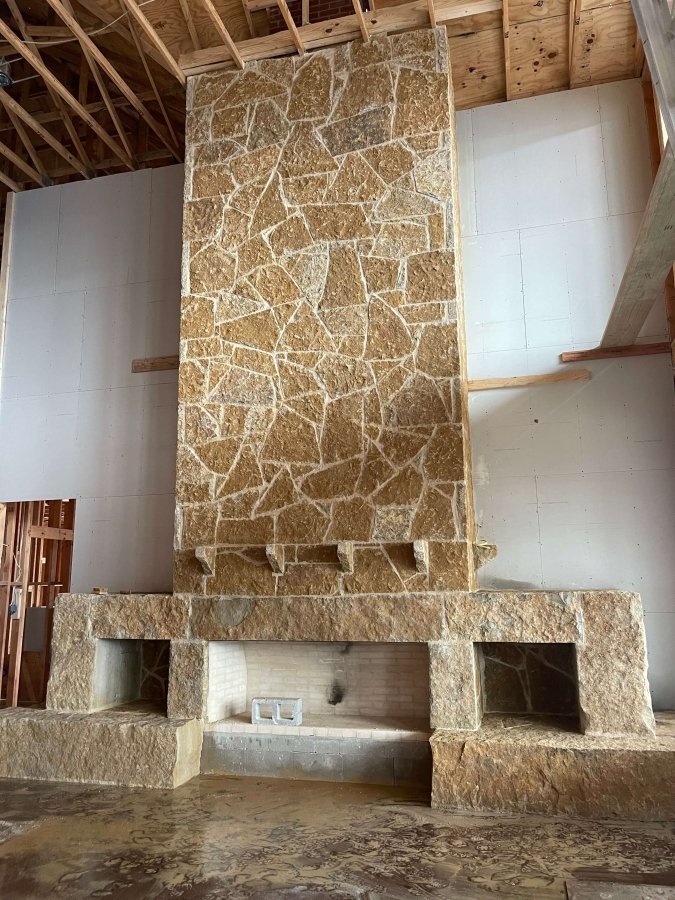
You’ve probably seen cast stone on commercial buildings. It’s a manufactured material that combines Portland cement, sand, and natural aggregates to create a stone-like material that’s stronger and more affordable than quarried stone.
It’s an impressive look: large, smooth cast stone tiles and columns highlight key spaces beautifully. And though it’s more common in commercial masonry installations, more neighborhoods and homeowners in Frisco are using cast stone for accents in exterior walls, entryways, and even interior spaces
What Is Cast Stone Cladding?
Cast stone isn’t actually stone at all. It’s a precast concrete product that mimics the appearance of natural cut stone through careful manufacturing. We create it using Portland cement, natural aggregates, and sand, then shape it using methods like vibratory dry tamping or wet casting.
The result is a fine-grained texture that closely resembles quarried stone like Portland or Bathstone. You can get precise color matching, various textures, and custom finishes that would be impossible or extremely expensive with natural stone.
Why Are Frisco Homeowners Choosing Cast Stone Cladding?
Cast stone is really versatile. You can create custom molds for unique shapes and sizes that perfectly fit your project. Smooth, textured, or antiqued finishes -cast stone delivers.
The manufacturing process lets you replicate expensive a natural stone look at a fraction of the cost. Plus, you’ll get consistent color and texture across all pieces, something that’s nearly impossible with quarried stone. And this consistency makes planning and installation so much easier.
Built to Last Decades
Cast stone typically achieves compressive strength around 6,500 psi or higher, which exceeds most natural limestone. It absorbs less moisture than natural stone, giving it better freeze-thaw durability. This means fewer cracks and less damage during harsh DFW winters.
Weather resistance is another major advantage. Cast stone stands up to rain, wind, and temperature changes better than many natural stones. You’ll see less weathering and color fading over time.
Smart Financial Choice
The cost savings with cast stone are significant. You’ll pay less for materials and installation compared to natural stone. Manufacturing eliminates the quarrying and transportation costs associated with natural stone.
Maintenance costs stay low too. Cast stone requires less frequent repairs and treatments than natural stone. The consistent manufacturing process means replacement pieces match perfectly if you ever need them.

Where You’ll See Cast Stone
Cast stone can be clad onto any masonry surface but we tend to see this style appearing in the same sorts of places across residential (or commercial) properties.
Home Exteriors and Entryways
Cast stone transforms residential exteriors with sophisticated facade enhancements. You’ll often see it used for entryways, columns, and accent walls that create dramatic curb appeal.
The material works particularly well for front porches, garden walls, and architectural details like window surrounds. Many homeowners choose cast stone for fireplace surrounds and outdoor kitchen areas where durability matters.
Commercial and Public Buildings
Government buildings, schools, and retail structures frequently use cast stone for large-scale visual impact. The material helps create a sense of permanence and quality that’s important for institutional buildings.
Cast stone allows architects to achieve grand architectural statements while staying within budget. You’ll see it on everything from courthouse facades to shopping center entrances where brand expression matters.
Outdoor Living Spaces
Landscape and hardscape applications showcase cast stone’s appeal. Garden walls, pillars, and decorative outdoor features benefit from its weather resistance and design flexibility.
Pool areas, outdoor kitchens, and patio walls all work well with cast stone. The material handles moisture and temperature changes better than many alternatives while maintaining its appearance.
Cast Stone In Frisco Homes
We were recently hired by the homeowner of an upscale home in Frisco to repair and replace cast stone cladding across their large entryway, and solve some problems with their entryway’s roof and drainage systems.
We wrapped 3 sides of their home’s entryway, with dozens of large cast stone tile pieces that each weighed over 150 lbs. The prior cladding had been installed without proper support, putting a dangerous strain on their exterior.
But we were able to install steel lintels (support bars) between the concrete core pillars wrapped in brick which act as the supports for their covered porch. Then we could affix the cast stone tile to the wall, supported by these new steel lintels.
The color and texture had to match the home’s existing stone stairs and other exterior stone accents -and the entire project needed to be completed in time for an event the homeowner was schedule to throw.
Of course, our expert crews, working with the folks at Clark Outdoor Designs (landscape designers out of Frisco), were able to turn this project around, on time, on budget (of course), and produce quality work that significantly upgraded the appearance, and safety, of this home.

Planning Your Cast Stone Project
When it comes to cast stone, you have a lot of flexibility in your design -that’s what’s so great about cast ston in the first place…
Choosing Textures and Colors
Surface treatments range from smooth contemporary finishes to heavily textured traditional looks. Antiqued finishes can give new construction an aged, established appearance that blends with historic neighborhoods.
Color selection is broad enough to complement any existing materials. You can match brick, stucco, or other stone elements, or create intentional contrast for visual interest. The key is achieving harmony in your overall design.
Details Make the Difference
Shadow lines and articulation add depth and visual interest to cast stone installations. These details break up large surfaces and create the play of light and shadow that makes stone so appealing.
Joint work affects the final appearance significantly. Mortar joints create a traditional masonry look, while dry-stacked appearances offer a more contemporary feel. Your choice depends on your overall design goals.
Mixing Materials Successfully
Cast stone integrates beautifully with brick, stucco, metal, and other materials. The key is maintaining proportion and balance so no single material overwhelms the design.
Consider how different materials will weather and age together. Cast stone’s consistent appearance can provide stability in designs that mix multiple materials with varying characteristics.
How Cast Stone Gets Installed
Site preparation starts with evaluating your substrate and load-bearing requirements. Cast stone works on both load-bearing and non-load-bearing walls, but the attachment method changes based on structural needs.
In the case of our Frisco homeowner, the steel lintels provide support to enable the walls of their entryway to support the extremely heavy weight of the cast stone tile.
Installing The Cast Stone
Adhesives work well for lighter panels on suitable substrates. Mechanical anchors provide superior holding power for larger pieces or challenging installations -such as the one in Frisco. It depends on which surfaces you want to clad and other factors; but we’ll recommend a strategy if it’s necessary.
But it’s hard work that requires a lift because cast stone is very heavy and we’re placing them exactly into position, one after the other. It would be impossible to manage this delicate task by human hand, and it requires years of experience to pull off even with the right team and the right tools.
Finishing Touches
Protective coatings help to preserve the appearance of cast stone. In some cases, cast stone benefits from sealers that repel water, so long as they allow vapor transmission (for the tile to breathe). If necessary, we’ll recommend products after installation.
Getting installation right solves all kinds of future problems, before they begin. Regular cleaning and occasional resealing are also very important if you want to keep cast stone looking great. And, in good news, the maintenance tends to be easier for homeowners to manage than concrete and brick.
Potential Challenges to Consider
Larger cast stone panels require proper equipment for safe handling and installation. This isn’t a DIY project; you’ll need experienced masons with the right tools and knowledge.
Labor skill requirements are higher than basic siding installation. Proper installation techniques ensure long-term performance and prevent costly problems down the road.
Weather Effects Over Time
UV exposure can cause some color fading, though high-quality cast stone resists this better than many alternatives. Protective coatings and sealants help mitigate these effects.
Regular maintenance and proper installation minimize weathering issues. Most problems occur when installation shortcuts compromise the system’s integrity.
Moisture Management
Moisture penetration risks exist with any cladding system. Proper drainage planes and installation techniques prevent water from reaching your building structure.
Spalling can occur if water freezes inside the material. This is why proper installation and moisture management are so important for long-term success.
The Look Of Cast Stone Though -Stunning
Cast stone cladding offers homeowners an excellent way to achieve the timeless beauty of natural stone with modern performance and affordability.
Whether you’re planning a complete exterior renovation or adding architectural details to your entryway, cast stone delivers durability and elegance that lasts for decades.
The key to success lies in proper planning, quality installation, and working with the experts who make every masonry project easy. When done right, cast stone cladding can totally transform your exterior while providing solid long-term value and performance.
Need help with stone cladding or any other masonry project? Contact the Brick Experts team for an in-person assessment and free quote today.