Choosing materials for your home’s exterior is a big decision. Your home’s aesthetic -it’s look and feel- change completely depending on your choices. And it’s not necessarily an easy choice! Of course, you want your house to feel unique and to fit your own personal style; but you also have to be sure that the design you settle on works within your community’s HOA guidelines.
Materials For The Exterior Of Your Home
Materials like brick, stone, and composites, offer unmatched durability compared to vinyl siding or wood. They resist fire, insects, and severe weather while maintaining their appearance for generations. The choice between brick and stone isn’t even really a choice; the value of a home built with these durable materials is much, much higher.
Aesthetics and Style
Your home’s exterior sets the tone for everything else in your home design. Brick and stone can both create sturdy exteriors that protect your home’s walls, but they look very different and give off different vibes.
Brick Has A Timeless Appeal
Brick delivers that classic American home look that never goes out of style. Bricks come in dozens of colors, from deep reds and browns to lighter tans and grays and their uniform shape lets masons create different patterns like running bond, herringbone, or basket weave while laying the bricks.
Stone Offers Natural Elegance
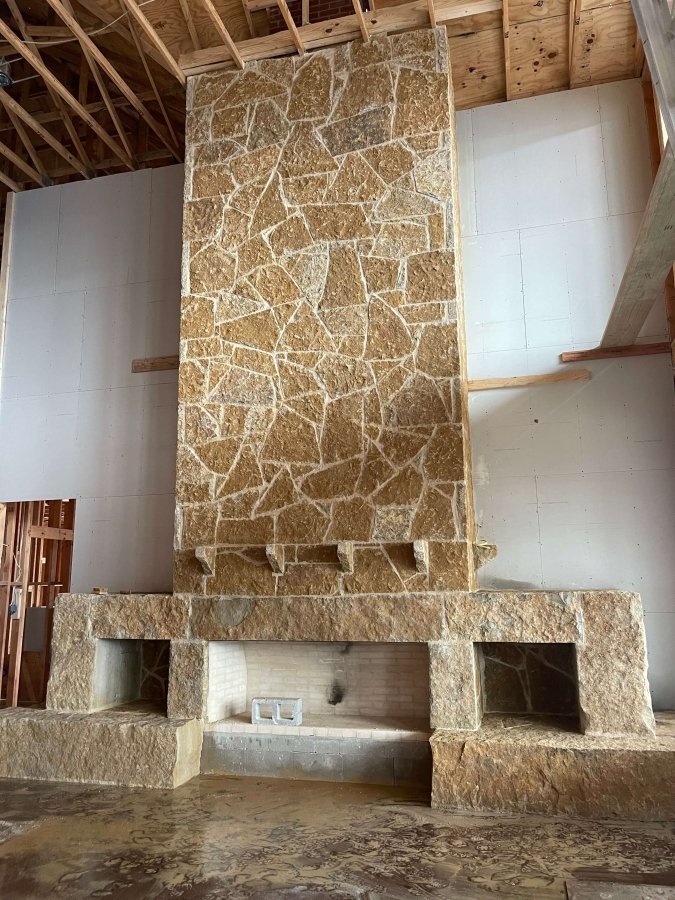
Stone masonry, on the other hand, possesses unique character that can’t be easily replicated. Every piece has its own grain, color variation, and texture -compared to the consistency of brick. Particular varieties like limestone, granite, and fieldstone each create different moods, and we tend to use locally-quarried stones, so the aesthetic has a distinctly Texan feel.
The irregular shapes and natural colors make every stone wall one-of-a-kind -even in very standardized neighborhoods. You won’t find two identical stone facades, which appeals to homeowners wanting something distinctive in HOA-controlled environments.

Masonry’s “Forever”
When you invest in masonry, you’re planning for decades of protection. Brick and stone both last longer than most alternatives, but they handle wear and weather a little differently.
Brick has protected buildings for centuries. It resists fire better than most materials and handles compression loads extremely well. Properly installed brick walls can last 100+ years with basic maintenance.
Stone Stands Strong For Ages
Stone outperforms brick in harsh weather conditions. Its density makes it less porous, so water damage is rarely an issue. Ancient stone buildings prove this material can last millennia with minimal care.
Stone’s natural strength means it rarely cracks or crumbles like brick might. It handles freeze-thaw cycles better and maintains its structural integrity longer.
Comparing Brick and Stone Over The Decades
Well-maintained brick typically lasts 75-100 years before major repairs are needed. Stone can easily exceed 100 years and often reaches 200+ years with proper installation. But either way, both materials outlast wood, vinyl, or metal siding by decades.
How To Consider The Costs
Budget is often the major deciding factor when it comes to selecting the materials for your home’s exterior. The price difference between brick and stone affects both immediate costs and long-term ROI potential.
Brick Is Less Costly Upfront
Classic brick typically costs 3-4 times per square foot what brick veneer costs. Natural stone costs significantly more at 10x the cost of brick veneer, per square foot installed, and stone veneer at 2-3x per square foot than brick veneer.
Labor costs favor brick because it’s lighter and more uniform. Masons can work faster with standardized brick sizes compared to irregular stone pieces that require custom fitting. But the tradeoff in style and appearance is tremendous.
Stone Pays Off In The Long-Term
Both materials increase home resale value, but stone always commands higher premiums. Stone’s lower maintenance needs offset some of the higher upfront costs. If you can afford the install, you’ll spend less on repairs and repointing over the decades.
Maintenance and Repair
Long-term care requirements are worth calculating in your total ownership costs because while both materials need attention, it’s at different intervals and intensities.
Brick Needs Periodic Attention
Mortar joints typically need repointing every 20-30 years. This involves removing old mortar and installing fresh material. Cleaning brick requires gentle methods to avoid damage.
Watch for spalling, especially after freeze-thaw cycles. Efflorescence can be cleaned but may indicate moisture problems that need addressing.
Stone Requires Less Upkeep
Stone’s natural durability means less frequent maintenance. Mortar repointing may be needed every 30-50 years, depending on climate and installation quality.
Some stone types benefit from sealing, especially in areas with acid rain or heavy pollution. Structural settling can affect stone walls, requiring professional assessment.
Climate and Regional Suitability
Texas weather presents unique challenges that influence material performance. Consider your local climate when choosing between brick and stone.
Brick in Hot Climates
Brick’s thermal mass helps regulate temperature swings. Light-colored bricks reflect heat, keeping homes cooler. However, intense UV exposure can fade some brick colors over time.
The porous nature of brick allows some moisture movement, which can be beneficial in humid climates but problematic during freeze-thaw cycles.
Stone in Harsh Weather
Stone excels in freeze-thaw conditions because of its low porosity. Water drainage around stone walls is crucial for preventing moisture problems.
Stone’s natural color won’t fade like some brick finishes. It handles extreme temperature changes without cracking or spalling.
Choosing What’s Right for You
Your decision should balance budget, climate, aesthetics, and maintenance preferences. There’s no universal “best” choice; only what works for your specific situation -and your HOA’s regulations.
Many homes combine both materials with great effect. Stone accents on brick homes add visual interest without the full cost of stone construction. Brick and stone veneers offer reduced prices while simplifying the installation and reducing material costs.
Consider your architectural style and budget when making your choice. Either material will serve you well, but you’ll probably love one more than the other -and that’s just as important.
Need help with brick repair or construction? Contact the Brick Experts team for an in-person assessment and free quote today.